The Therapeutic Benefits of Clay Work for Young Children
Clay offers young children a unique medium for creative expression, emotional processing, and sensory engagement. Unlike many art materials, clay invites manipulation, transformation, and repeated reworking without judgment or expectation of finished products. At Little Pioneers Early Learning Centre South Windsor, our educators recognise clay as a therapeutic tool supporting emotional wellbeing, self-regulation, motor skill development, and genuine creative expression.
Understanding Clay Therapy
Clay therapy harnesses the inherent therapeutic qualities of working with clay—a natural material with unique tactile and manipulative properties. The process, rather than the product, provides primary benefit. Children can squeeze, poke, stretch, flatten, roll, and reshape clay repeatedly without fear of mistakes. This freedom supports genuine creative expression and emotional release.
Research demonstrates that clay work supports stress reduction and relaxation, enhanced fine motor development, improved focus and concentration, emotional expression and processing, increased self-esteem and confidence, and development of problem-solving and spatial reasoning.
Sensory Benefits
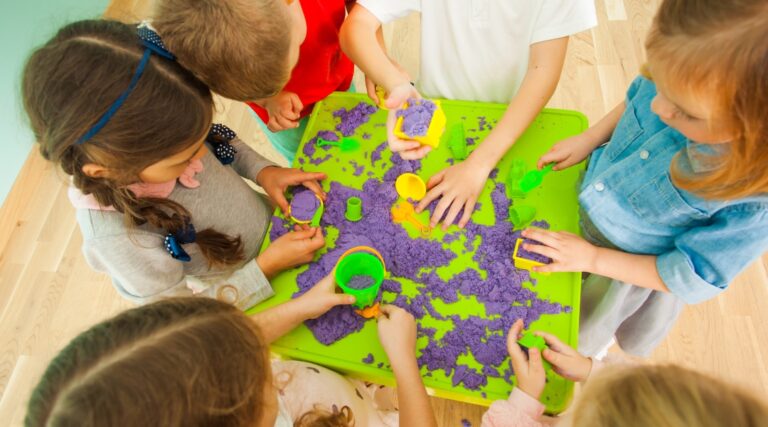
Clay provides rich sensory experiences. Its texture—cool, smooth, yielding—offers tactile input that many children find calming. The resistance clay provides as children mould it engages proprioceptive systems, supporting body awareness and regulation. Manipulating clay requires focused attention to physical sensations, grounding children in present-moment experience.
At our childcare South Windsor centre, we provide varied clay types offering different sensory qualities—air-dry clay, earthenware, polymer clay—allowing children to explore and select preferred materials.
Emotional Expression and Processing
Clay provides non-verbal pathways for emotional expression. Children who struggle to articulate feelings can express them through clay work. Aggressive kneading might process frustration. Gentle shaping might reflect calm states. Creating narratives with clay figures allows exploration of situations and feelings.
The impermanence of clay—forms can be destroyed and reformed—supports processing difficult experiences. A child worried about making mistakes experiences relief when their clay creation can be squashed and recreated infinitely.
Motor Skill Development
Clay work naturally develops fine motor skills. Squeezing, pinching, rolling, and shaping require precise finger and hand control. Building with clay develops bilateral coordination and hand-eye coordination. These motor competencies support literacy skills like pencil grip and writing.
Self-Regulation and Calming
Many children find clay work intrinsically calming. The repetitive manipulation, combined with sensory input, supports nervous system regulation. Educators often notice children becoming noticeably calmer after clay engagement, suggesting physiological calming effects.
Building Confidence and Competence
When educators embrace process-focused rather than product-focused clay work, children develop confidence through creative expression. They learn their ideas have value, their creativity matters, and they’re capable artists. This builds self-esteem and willingness to take creative risks.
Building School Readiness
Clay work develops capabilities supporting school readiness including fine motor control for writing, sustained focus and attention, emotional regulation and self-control, problem-solving and spatial reasoning, and confidence in creative expression.
Contact Little Pioneers South Windsor Today
If you’re looking for a childcare South Windsor centre that values creative expression and therapeutic engagement with materials, we’d love to welcome your family to Little Pioneers. Our educators provide rich clay experiences supporting emotional wellbeing, motor development, and genuine creative expression. Contact us today to arrange a tour and discover how our approach to early childhood education nurtures confident, capable, emotionally healthy learners.