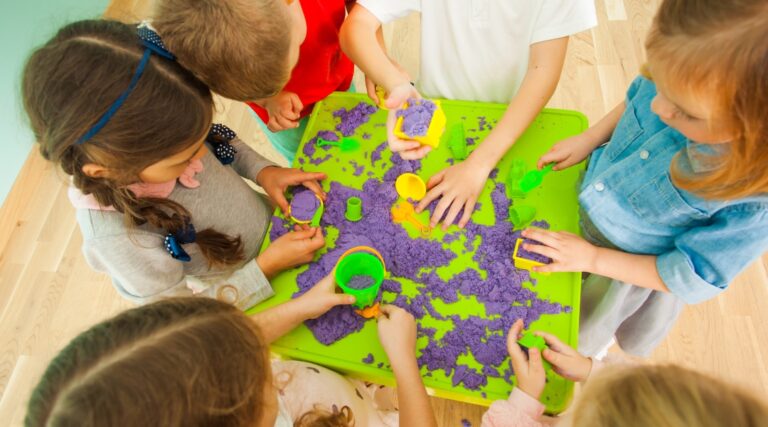
Encouraging Problem-Solving Skills Through Play
At Little Pioneers Arcadia Vale, we believe that play is one of the most powerful ways children learn. Through play, children explore new ideas, experiment with solutions, and develop essential problem-solving skills that will benefit them throughout life.
Problem-solving is a critical skill that helps children navigate challenges, think creatively, and build resilience. Whether they are figuring out how to build a tall tower, deciding how to share toys with friends, or working out how to complete a puzzle, play provides endless opportunities for children to practise thinking critically and independently.
In this blog post, we’ll explore the benefits of problem-solving through play and share some engaging activities that support this important skill.
Why Problem-Solving Skills Matter in Early Childhood
Problem-solving is more than just finding the right answer—it involves reasoning, creativity, and persistence. Developing these skills in early childhood helps children:
🧠 Think Critically – Encourages logical thinking and the ability to analyse situations.
💡 Be Creative – Sparks new ideas and innovative ways of approaching challenges.
🤝 Work Cooperatively – Encourages collaboration, negotiation, and teamwork.
💪 Build Resilience – Helps children learn that mistakes are part of learning and growth.
🌱 Gain Independence – Supports confident decision-making and self-reliance.
By encouraging problem-solving in everyday play, we help children develop the confidence to tackle challenges both in childhood and later in life.
How We Encourage Problem-Solving Through Play
At Little Pioneers Arcadia Vale, we incorporate problem-solving opportunities into a variety of play experiences. Here are some key ways we foster this skill:
1. Open-Ended Play Materials
Open-ended materials encourage children to think creatively and find multiple solutions to a challenge.
🧩 Blocks & Construction Play – Building with blocks, LEGO, and other materials helps children experiment with design, balance, and problem-solving.
🌿 Loose Parts Play – Providing natural and everyday items (sticks, buttons, shells, cardboard) allows children to create, design, and innovate.
🎭 Dramatic & Role Play – Pretend play encourages children to think through social problems, navigate different roles, and develop their own solutions.
How It Helps: Encourages independent thinking, exploration, and decision-making.
2. Puzzles & Brain Teasers
Puzzles and problem-solving games challenge children to think critically and develop perseverance.
🧩 Jigsaw Puzzles – Help children develop patience and logical reasoning.
🕵️ Pattern & Matching Games – Strengthen observation skills and problem-solving abilities.
🔎 Scavenger Hunts – Encourage children to follow clues and use reasoning to find objects.
How It Helps: Enhances cognitive skills, persistence, and logical thinking.
3. STEM-Based Exploration
STEM (Science, Technology, Engineering, and Maths) activities provide excellent problem-solving opportunities.
🚀 Building Challenges – Using recycled materials or LEGO to build bridges, towers, or vehicles encourages children to test and modify their ideas.
💦 Water Play Experiments – Exploring floating and sinking, measuring volume, and creating water pathways fosters curiosity and prediction skills.
🧪 Simple Science Experiments – Mixing colours, making volcano eruptions with baking soda and vinegar, or planting seeds encourages questioning and discovery.
How It Helps: Develops curiosity, experimentation, and logical reasoning.
4. Group Problem-Solving Activities
Collaborative play helps children develop social problem-solving skills and teamwork.
🏗 Team Building Challenges – Activities like “build the tallest tower” encourage children to work together, share ideas, and problem-solve.
👣 Obstacle Courses – Creating and navigating obstacle courses requires planning, sequencing, and physical problem-solving.
🎭 Storytelling & Puppet Play – Acting out scenarios helps children practise solving social and emotional challenges.
How It Helps: Enhances communication, teamwork, and adaptability.
5. Outdoor Exploration & Nature Play
Nature provides endless opportunities for problem-solving and critical thinking.
🏕 Nature Hunts & Treasure Hunts – Encourages children to follow clues and think strategically.
🛤 Mud Kitchen Play – Mixing ingredients and experimenting with textures fosters creativity and discovery.
🔎 Exploring Cause & Effect – Observing how water flows, how leaves change, or how insects move helps children make connections.
How It Helps: Encourages curiosity, observation, and creative problem-solving.
Supporting Problem-Solving at Home
Parents can support problem-solving skills at home with simple everyday activities:
✔️ Ask Open-Ended Questions – Instead of giving answers, encourage children to think: “What do you think will happen if we try this?”
✔️ Encourage Trial & Error – Let children experiment, make mistakes, and find solutions at their own pace.
✔️ Play Board Games & Card Games – Games that involve strategy and decision-making help strengthen critical thinking.
✔️ Give Real-Life Problem-Solving Tasks – Simple activities like setting the table, packing a bag, or planning a day out encourage children to think ahead and solve problems.
Final Thoughts
Problem-solving is an essential life skill that children develop through hands-on experiences, curiosity, and play. By encouraging problem-solving in early childhood, we empower children to think creatively, work collaboratively, and approach challenges with confidence.
At Little Pioneers Arcadia Vale, we are committed to fostering a playful and engaging environment where children develop the skills they need to succeed. If you’d like to learn more about how we support problem-solving through play, feel free to reach out or visit our centre!